
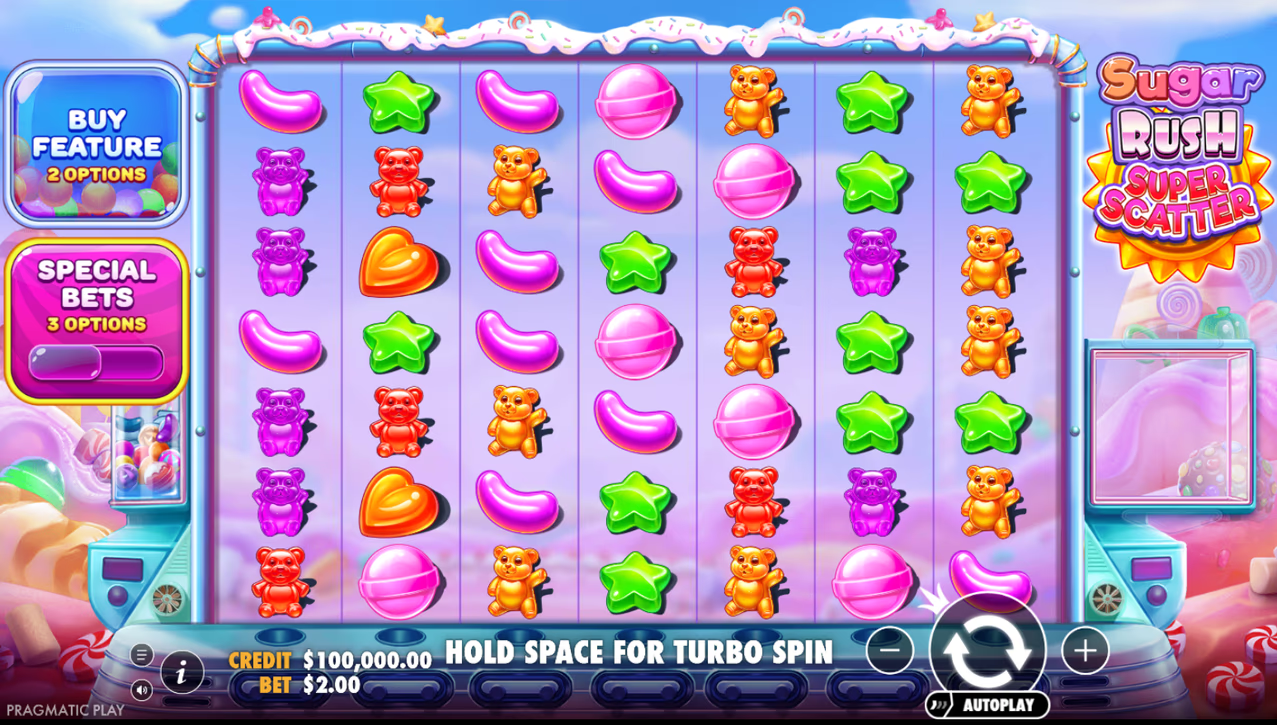
Why This Slot Calls for a Plan Before You Spin
The cluster mechanic on the 7x7 grid tumbles winning symbols away and drops in new ones automatically, which keeps rounds moving fast. Sessions on this kind of slot can rack up far more spins per minute than a classic payline game, so it is easy to lose track of both time and total stake without noticing.
Very high volatility paired with a 32.26% hit frequency means long stretches with no win are normal, not a sign something is wrong. That gap between wins is exactly when the urge to raise the bet or chase a loss tends to show up, so it helps to have a stop point decided in advance.
The Super Scatter mechanic can hand out a large instant prize the moment it triggers, sometimes running up to the game's stated 50,000x cap. A big hit like that can create a strong pull to keep playing in hope of repeating it — deciding beforehand whether a win like that ends the session removes that decision from a moment when judgment is least reliable.
If your operator offers an ante bet, it raises the cost of every spin in exchange for a better shot at triggering free spins. That trade-off is worth deciding on paper before the first spin, since increasing the ante bet mid-session under frustration or excitement is a common way budgets slip.
Limit tools work best set up cold, before a deposit is even made. Adjusting them once a session is underway, especially after a loss or a near-miss, tends to move them in the wrong direction.
Age Rules and Where to Find Limit Tools
Play is restricted to 19+ across most of Canada, with the age lowered to 18+ in Alberta, Manitoba, and Quebec. Licensed operators serving Canadian players place deposit, loss, session, and wagering limits inside account settings, usually under a tab labelled account preferences or responsible gambling. Self-exclusion is handled either directly through the operator or through a provincial program, and both routes typically let you pause play for a fixed period or indefinitely. It is worth checking these settings once, right after opening an account, rather than searching for them after a session has already gone longer than planned.
Setting Up Limits Step by Step
Before making a deposit, open the account settings menu and look for a deposit limit option, usually offered as daily, weekly, or monthly caps. On a fast, cluster-based game like this one, a modest weekly cap does more to keep sessions short than a high monthly figure that only gets checked once a month.
Set a loss limit separately from the deposit limit if your operator offers one. Because tumbling wins reinvest straight into the next cascade, it is harder to track net loss by eye than on a slower, single-payline game, so a system-enforced limit does the tracking for you.
Turn on session reminders or reality checks if they are available. A prompt every 30 to 60 minutes is enough to force a pause and take stock of how many spins have passed and how the balance has actually moved, rather than relying on a feeling of how long you have been playing.
Decide the bet size and whether to use the ante bet before the first spin, then leave both settings alone for the session. Adjusting either one after a win or a loss is usually a reaction, not a plan.
Where a bonus buy is offered by your operator, treat its cost as a separate budget line rather than folding it into normal spin money. It adds to session spend; it does not replace the limits already set for regular play.
If a session pattern starts to feel hard to stop on its own, use a time-out or self-exclusion tool through the operator account, or through an independent provincial self-exclusion program where one is available in your region.